
Franklin Co, MA (he/him)
Professional Counselor Associate
Current Openings Available
Individual Therapist
Children|Adolescents|Adults
THE WORK I DO
click + to learn more

-
I offer individual therapy to adults, who fall into three stages of psychoanalyst Erik Erikson’s development model: intimacy vs. isolation (young adulthood), generativity vs. stagnation (middle adulthood), and integrity vs. despair (late adulthood). Early adulthood introduces new and significant responsibilities as young adults transition from school to career and develop security in their identities and relationships. Middle adulthood involves adapting to relational shifts with both kids and parents growing older, as well as increased attention toward maintaining cognitive and physical health. Late adulthood presents further changes for older adults who are no longer defined by their careers or roles in the family/community and benefit from sustained relationships with loved ones that provide comfort and stability.
Wherever you are on your life’s trajectory, I aim to provide you with a space that treats your reality with nonjudgment and reverence; where we work together to identify common themes and patterns, name and process emotions, grieve injustices and loss, practice coping skills, empower one another, and infer meaning from your experiences.

-
I offer individual therapy to adolescents, who are in the identity vs. role confusion stage of psychoanalyst Erik Erikson’s developmental model. In my practice, I consider the range of cognitive, emotional, and physical abilities typically present in adolescence to help me understand the problems reported by my teenage clients as they see them. A significant theme throughout adolescence is negotiating power in relationships, as teenagers gain independence, develop romantic and sexual interests, and reflect on their identities.
I aim to neutralize any imbalances in power between me and my teenage clients by creating a nonjudgmental environment that normalizes emotions and honors learning from mistakes. Focuses in my sessions with adolescents may include emotion regulation, social skills building, familial and peer relationships, executive function, and coping skills.

-
I offer individual therapy to adolescents and adults in the queer community, who deserve to feel celebrated and affirmed for who they are in and outside of counseling. Individuals with minoritized genders, sexual and affectional orientations, and relationship structures are recognized for their persistence through minority stress. This is a type of chronic stress experienced uniquely by minority groups as an outcome of social stigma, prejudice, and discrimination, and documented by research on physical and mental health disparities of differing social groups.
In my practice with LGBTQIA+ clients, I provide a space for curiosity and learning where clients set the pace at which they explore and disclose; I support relational healing using the therapeutic alliance formed between me and my clients; and I aim for balance in our perspectives to include celebration, mourning, frustration, and hope.

-
I offer individual therapy to adolescents and adults from racially minoritized backgrounds, who deserve high quality counseling that honors the person’s heritage, values, and reality. Though predominantly white, the U.S. population has increasingly diversified and includes a multitude of BIPOC identities: native, immigrant, second generation, multiracial, adoptee – to name a few. This umbrella term provides solidarity and community while obscuring its inhabitants, mirroring the experiences of those who struggle to balance filial piety* with the Western values of individualism and capitalism.
In my practice with BIPOC clients, I validate the experiences of my clients to support their grounding in a reality that is often vilified, stereotyped, or ignored by the dominant culture; I encourage my clients to explore their identities and to identify their values as individuals and as members of a family/community; and I challenge my clients to use expansive thinking to make sense of their complex experiences and relationships.
*filial piety - an attitude of respect for parents and ancestors in societies influenced by Confucian thought

-
I recognize that substance use is difficult to navigate in a culture that normalizes some forms of it while condemning others. In my experiences with loved ones who struggle to manage their use, I have witnessed the enduring challenges that accompany addiction for both the individual and the people who care about them. Whether your relationship to substances is casual, committed, or somewhere in between, my approach to our work together is non-judgmental and affirming. I seek to understand how using serves my clients from a person-centered and trauma-informed perspective that considers both personal and systemic stressors.
With every client, I assess for substance use and empower you to wonder whether change is necessary. I will challenge you to explore the connection between your use and your mental health with regard to your autonomy and the pace you set. The line between casual and problematic use is often vague, and our work together may involve determining where that line is for you, your ability to stop short of it, and alternate coping strategies to manage your use. Some clients benefit enough from reducing their intake while others require full sobriety to sustain their health and wellbeing.
In any case, my approach to substance use treatment prioritizes relational healing, community support, and collaboration with other healthcare providers to promote meaningful change that is feasible and worth it for you.
A Passion For Mutual Empowerment & Growth
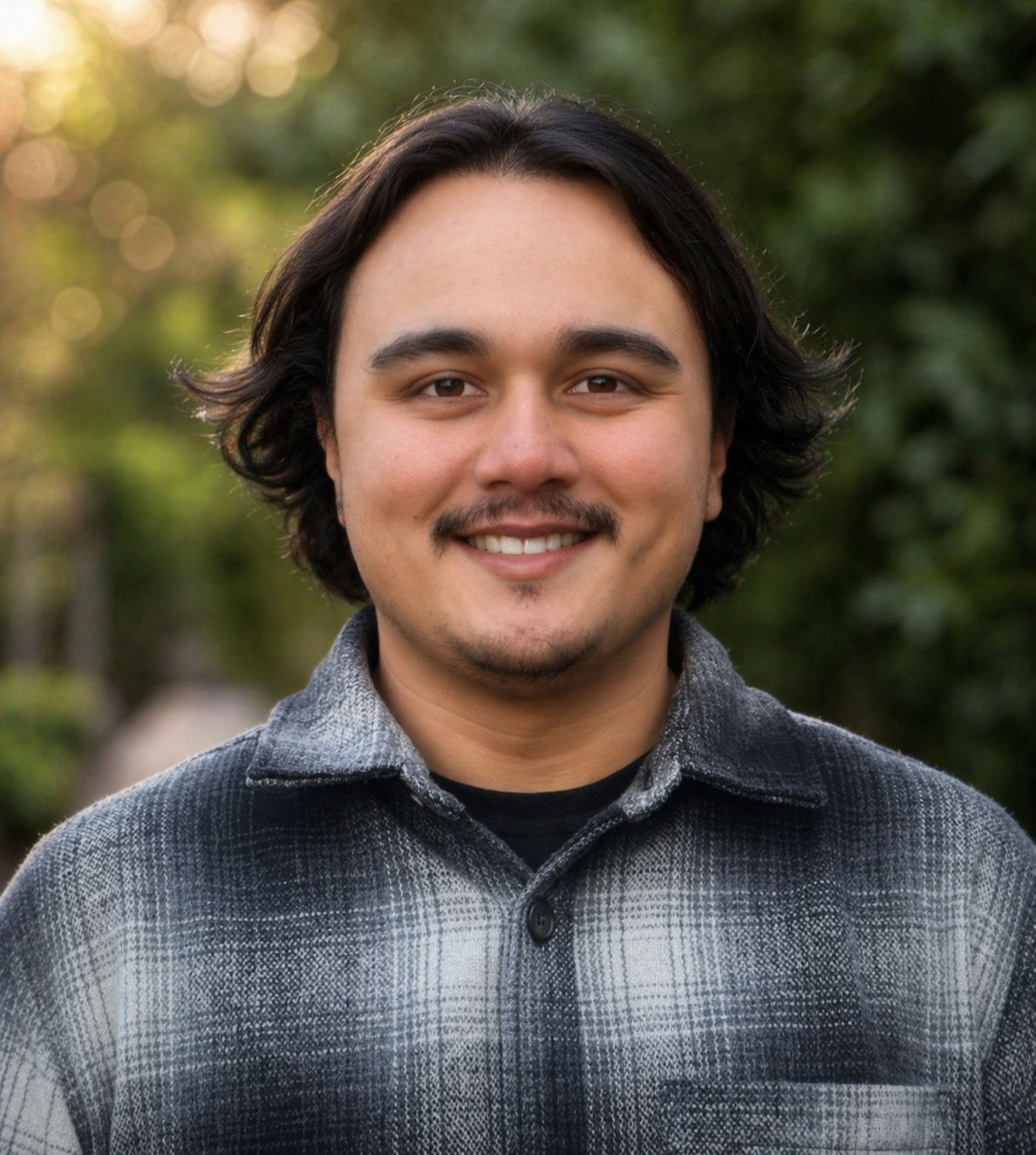
My name is Franklin (he/him), and I’m glad you made it here! Starting therapy is a choice that moves you toward change, which can feel hopeful and intimidating. I can’t tell you exactly what to expect, but you can learn more about me and my counseling approach below to help you determine whether we might be a good fit.

My Background
I am a Texas native born to an immigrant Chinese father from the Philippines and a white mother from a small coal mining town in rural Appalachia. My dad’s mother, my lola, was essentially a third parent in our household who helped raise me and my older sister, and I credit her most for the feelings of rootedness I have in my Asian heritage. She largely spoke in Tagalog and Chinese dialects that waned from my vocabulary as I progressed through school.
From an early age, I learned through her that love and connection encompass more than speech can convey. My mom’s side of the family continues to reside primarily in or around her hometown, where many of our relatives have worked in the coal mines. Despite their financially impoverished status throughout her upbringing, my mom says her family never felt poor because she and her siblings always had each other. These insights I’ve gleaned from my family reinforce my outlook on the power of relationships as protective factors and in healing emotional wounds.
I graduated with my bachelor’s degree in psychology and child development from the University of Texas at Dallas before pursuing my master’s degree in professional mental health counseling at Lewis & Clark Graduate School. My career has spanned across fields along the relational spectrum, including schools, special education, summer day camps, supervised parent-child visitations, and a state supported living center for adults with intellectual and developmental disabilities.

My Experience & Approach
I have worked with mental health challenges including anxiety, OCD, depression, bipolar disorder, PTSD, borderline personality disorder, ADHD, and disordered eating. In sessions, my clients and I have worked together on issues related to self-worth, abuse and neglect, financial stress, self-harm, suicidality, religious and racial trauma, transphobia, substance use, executive dysfunction, and interpersonal violence. My practice is based in relational cultural theory (RCT), an approach with foundations in psychodynamic, multicultural, and feminist theories; and I incorporate interventions from additional modalities, including cognitive behavioral therapy (CBT), dialectical behavior therapy (DBT), acceptance and commitment therapy (ACT), and narrative therapy.
In my practice, I use a relational and systemic lens to understand my clients’ problems. The relationships and cultures we occupy are significant factors that I consider as we explore your concerns and collaborate on solutions. My approach aims to neutralize imbalances in power between me and my clients based on our social locations (e.g., age, race, gender, sexual and affectional orientation, etc.). These identities are integral to our experiences in life, informing the values we hold, the beliefs we endorse, the privileges that benefit us, and the oppression we endure. I will work toward understanding the world as you see and live in it as we share and transfer the roles of expert, teacher, and healer.
Real Life | Outside the Counseling Room
When I’m not working, some of my favorite hobbies include being dog dad to my forever puppy, S’mores; singing in the car and at karaoke; climbing and yoga; watching movies (especially horror!); innovating new recipes in the kitchen; trying new restaurants; and traveling with friends.
-
-
I currently accept Regence BCBS, Anthem, BlueCross BlueShield, Aetna, Cigna, and Evernorth insurance. Beginning November 1st I will also accept Moda insurance.
If paying out of pocket, please contact me for current rates and to discuss payment options. I believe in accessible care and can talk with you about your options, including sliding scale spots when available.
For clients paying out-of-pocket, I can provide a superbill (an itemized receipt) that you may submit to your insurance company for possible reimbursement.
-
-
I receive clinical supervision from Leslie Taylor, LPC (C9013) and Lilyan Smith-Moore, LPC (C4955).